Should voting rights match a person’s legal responsibilities?
This post was written by a student. It has not been fact checked or edited.
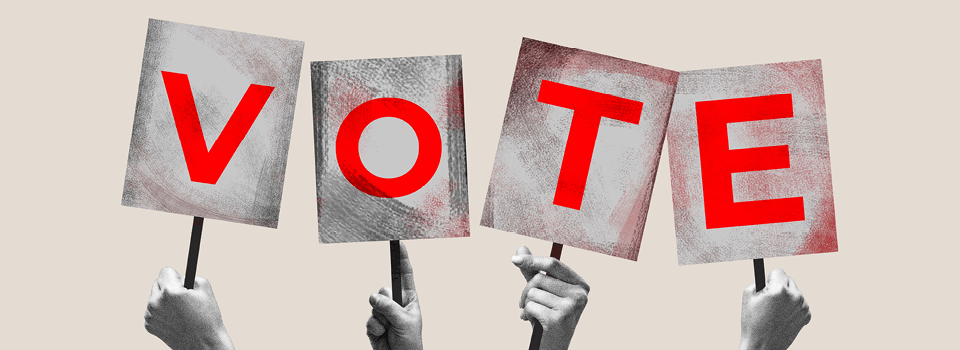
Children today are growing up in a world that has been influenced by political decisions that were made well before they are ever given the opportunity to contribute to that political process. Decisions regarding education, climate change, technology, and economic opportunity directly impact the current and future generations and will continue to influence the world in which today's youth must live for decades to come. The important issue that is raised by this is: if youth are already a part of the system and are impacted by its decisions, should they not also be given the right to contribute to the decisions that govern that system?.
I think that voting rights should correlate with a person's legal responsibilities because both are a part of participating in society. Decisions regarding education, climate change, technology and economic opportunity are decisions that will impact today's teenagers more than any other generation in the future decades to come.
Lowering the voting age could also help strengthen the state of democracy. Studies have shown that people who start voting at an early age are more likely to vote for the rest of their lives. Schools could tie the education of politics with the actual experience of voting, so that students could learn politics not just in theory but also in the sense that they can actually participate in it. This could encourage more critical thinking and responsibility for the state of society.
Some people would say that young people are not yet mature or informed enough to make informed decisions regarding politics. However, it should be noted that political information does not come at the age of eighteen. Many people vote at the age of eighteen with no information at all. But no one questions their right to vote. The answer is not the denial of the right to vote but the provision of information for all people.
Democracy is best practised when it involves all the people who are affected by it. Therefore, if teenagers are given the responsibility of voting, then they should also be given the representation.
Comments (4)
I agree with this standpoint because teenagers are already affected by political decisions, even though they cannot vote yet. Decisions about education, climate change, technology, and jobs will shape the future that young people will live in. According to the United Nations, young people’s participation is important for building strong and sustainable democracies, because they represent the future generation.
Also, research from the International Institute for Democracy and Electoral Assistance shows that people who start voting when they are younger are more likely to continue voting throughout their lives. This means that lowering the voting age could help increase long-term participation in elections and make democracy stronger.
There are already real examples of this idea. In Austria, the voting age was lowered to 16 in 2007. Studies showed that many 16- and 17-year-olds were just as interested in politics and capable of making decisions as older first-time voters, especially when they learned about politics in school.
Some people think teenagers are not mature enough to vote, but many adults also vote without fully understanding politics. Instead of taking away the right to vote, governments could improve political education in schools. If young people learn about politics and also have the chance to vote, they may become more responsible and active citizens in the future.
One strength of your standpoint is that you clearly explain why young people should have a voice in political decisions that affect their future. Your argument about teenagers being directly impacted by policies on education, climate change, technology, and the economy makes your position strong and relevant. 🌍
I found your example about schools connecting political education with the real experience of voting convincing because it shows how lowering the voting age could actually improve democracy. If students learn about politics and also participate in voting, they may become more responsible and engaged citizens in the future. 📚🗳️
One question I still have is: at what age do you think young people should start voting, and how could governments make sure they receive enough political education before doing so?
You could make this even stronger by adding a specific example of a country or study where young people were given voting rights earlier or where civic education improved participation in democracy. This would provide stronger evidence to support your argument. ✨
I agree that as children are living, growing up and being controlled by the laws and leaders of this world maybe they should have a say in voting because it's their world too. However, I think that allowing children to vote could lead to arguments and disputes between friends and children over political views. I also think that it could add stress and worries to children's lives that they shouldn't have to deal with. I believe the world should be a place for kids to grow up having fun not worrying about politics and voting.
Why do you think it could add stress and worries?
Unfortunately, things happen in the world and politics can be scary. I think if we start putting it all on young people it could add stress, frighten them and worry them about the future of the world laws and leaders.
Hello, talkative_statement,
One strength of your Standpoint is how clearly you explained that young people are directly affected by political decisions, like those about education, climate change, technology, and jobs. I especially liked how you pointed out that these decisions will impact teenagers for decades, which makes it clear why young people should have a voice in shaping the future.
I also found your idea of schools connecting political education with actual voting experience very interesting. It could help students not only learn about democracy but also understand it in practice.
However, I respectfully disagree with lowering the voting age too much. While I understand that some adults vote without enough information and that students could be educated, the issue of misinformation remains a big concern. Young people, just like adults, are often influenced by misleading information on social media, which could shape their voting decisions in the wrong way.
Because of this, I believe it would be better to focus on improving political education and critical thinking skills in schools first. Once young people are more informed, they will be better prepared to vote responsibly.
Overall, your Standpoint raises an important discussion about fairness in democracy and how young people should be involved in shaping the future. Thank you for helping me think about both sides of the argument. I’m looking forward to more discussions like this that make us consider important issues from different perspectives.