Should voting rights match a person’s legal responsibilities?
This post was written by a student. It has not been fact checked or edited.
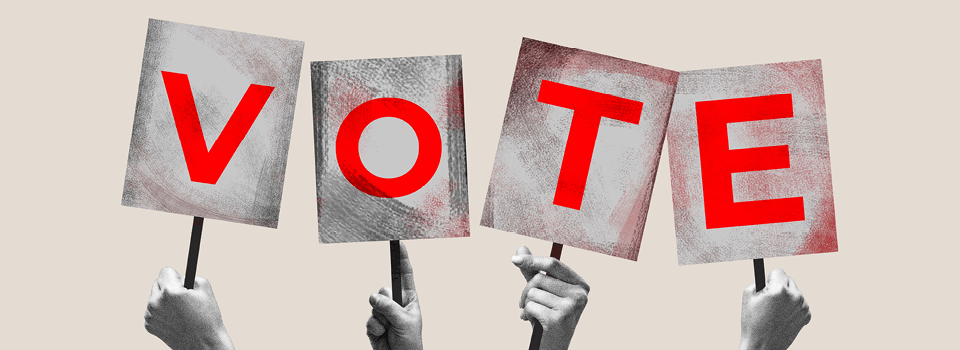
To start off, once you become 18 years old, you are allowed to vote. This is because you become an adult and you are considered as fully developed by this age. You are also qualified for jobs, marriage, alcohol, etc. Although, you may not understand political views, standpoints and governmental speeches, which could be a disadvantage. On the other hand, people who are younger and properly understand ministerial outlooks and other important topics, should be given the right to vote. This is because they may be able to understand consequences better than others within their age range. However, this also may be risky as some children could be incredibly young and may have biases because of someone else’s influence and they may be more gullible to these things.
For example, if you were to talk to an 18-year-old about politics, however they don’t have a job, is living with their parent/guardian (which is completely fine, however this may subconsciously make you think that they are incapable of taking care of themselves) or they took subjects in school that didn’t relate to administrative government (ie. Food technology), it would be stereotypical to think that they won’t understand most of what you’re saying and/or will make up random responses that they hope will go along with what you are saying. On the other hand, if you were to speak to a 16-year-old who took citizenship, business, etc and has an apprenticeship/stable job, you’d probably expect them to follow the conversation more smoothly and give you more interesting and complex answers. In that case, they probably would (as long as you talk about something they’ve learnt.)
In that scenario, the 16-year-old would be thought of as more reliable and trustworthy since they can understand things that the 18-year-old couldn’t. Nevertheless, the argument could be that 16-year-olds could still be ‘rebellious’ and ‘childish’ as they aren’t classified as an adult yet by the government.
According to the evidence submitted by Professor Sarah Birch and Professor Paul Whitely, there would be more variety if younger citizens were allowed to vote. Despite this, younger people don’t have particularly strong views when involved in governmental situations.
“Voting at 16 could well increase overall turnout in the medium- to long-term.”
“Most people do not have strong views on voting at 16.”
https://committees.parliament.uk/writtenevidence/48474/pdf/
-Professor Sarah Birch and Professor Paul Whitely.
This would mean that there would be a bigger democracy and more votes for multiple official events. However, the reason why many 16-year-olds may not be interested in voting is because of constant study in college and/or university (if they choose to take it.) They would most likely be too focused on their studies and may not have time to consider voting within that time. Overall, my opinion would be that younger people (however not younger than 16) should be able to vote if they have the correct knowledge to do so.
Unfortunately, this is my last year! Thank you for the festival! :)
Comments (0)